Deck backup data
Founder, menu, supply, sensitivity, team, site, risks, Q&A and roadmap. Figures match the deck. Guest prices include tax; investor figures are noted.
Founder Detail
The source of the launchpad that powers the main deck's 'Proof of Demand'—a serial entrepreneur's track record and the relationships that create a head start no later entrant can buy.
Shigeto Umeda
CEO, BookYou Inc. / Born April 1982
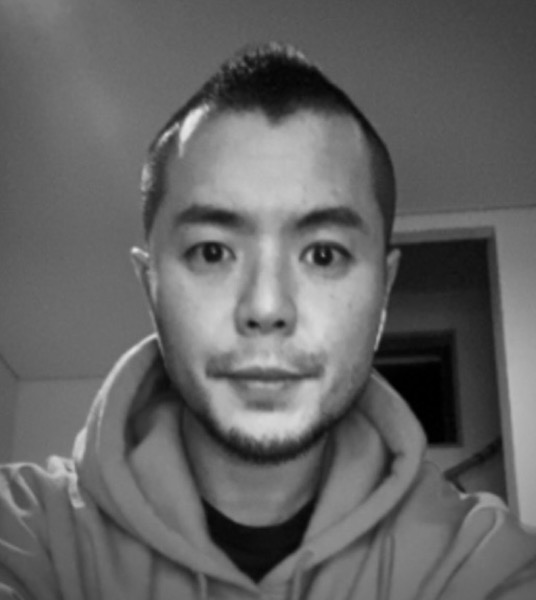
A serial entrepreneur with more than 20 years in IT spanning company founding, system/service design, fundraising, and business exits. Alongside an exit in ad technology, he has been at the core of Tokyo nightlife's high-net-worth network.
Sold to Opt (now Digital Holdings)
Sold his own stake (the relationship continues to this day)
Through this journey, he built deep relationships with the ownership tier of Tokyo's major nightclubs and bars (Celavi, V2, Zouk, Raise, GoldBar, and others). This broadly covers venues popular with inbound high-net-worth visitors.
He keeps reciprocal-referral relationships with a VIP tier that spends several hundred thousand to a few million yen a night, at times on the ¥10M scale. This same network converts directly into launch-period demand, and opening night can be lit with a celebrity event built to be posted. That is the substance of the launchpad (the ¥300K × ~100 parties breakdown is in the Launchpad chapter).
Beyond nightlife, he also has strong connections in influencer marketing. He can secure pathways for celebrities and top influencers to visit and post, igniting opening-period branding and UGC amplification in-house (social amplification is the asymmetric upside of this plan).
 ▶Marketing executed on the channel of YouTuber 'Hikaru'▶ Watch video
The founder single-handedly designs and implements the reservation system, customer management (CRM), social ad operations, and marketing infrastructure. Drawing directly on his ad-technology experience, he runs data-driven customer acquisition in-house and at speed, without outsourced development or ad-agency costs.
Choose your giant live king crab by weight — the full list
Guests pick, the weight is called out at the scale, and the crab is finished tableside. 1 crab per table, shared (2-8 guests).
Where Kitafuku Ginza discloses “1kg+” and “14.5cm shell,” KC discloses the per-course minimum kg, the maximum offered, shell width and claw width in full. Guests select at the tank; the opening rite lifts the crab to the scale and reads out the weight.
* Minimum = 2-guest table minimum (kgPerCover 0.67 × 2). Max offered = SOP-managed procurement ceiling. Size-up = weight-based surcharge (king ¥12,000/kg, hairy ¥22,000/kg = Toyosu live × 0.8 direct sourcing).
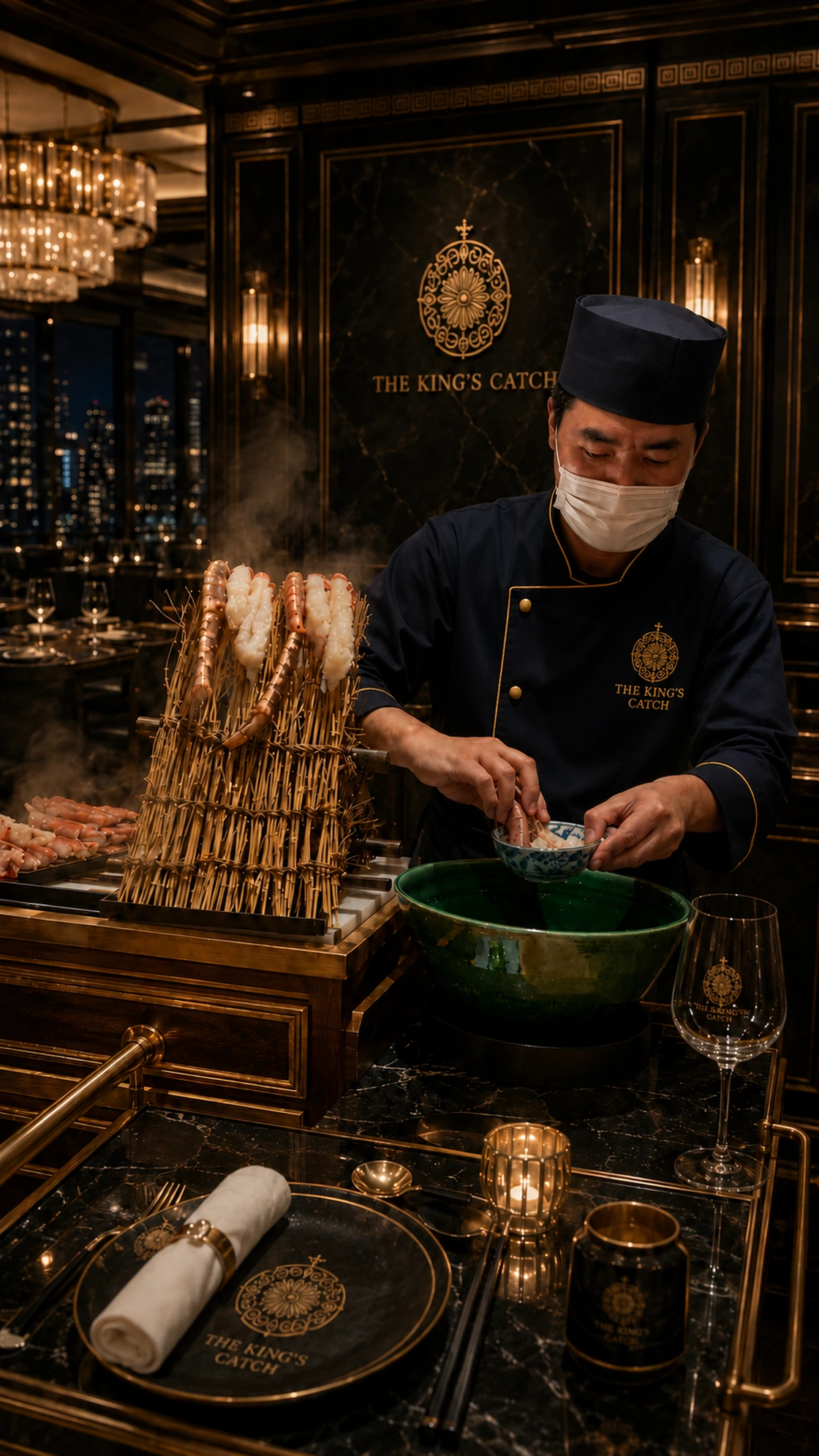
Note: tables show whole live-crab reference prices. Each course includes a base-size crab; size-up adds the weight difference at market price. Sourcing = Toyosu live × 0.8 (king ¥12,000/kg, hairy ¥22,000/kg).
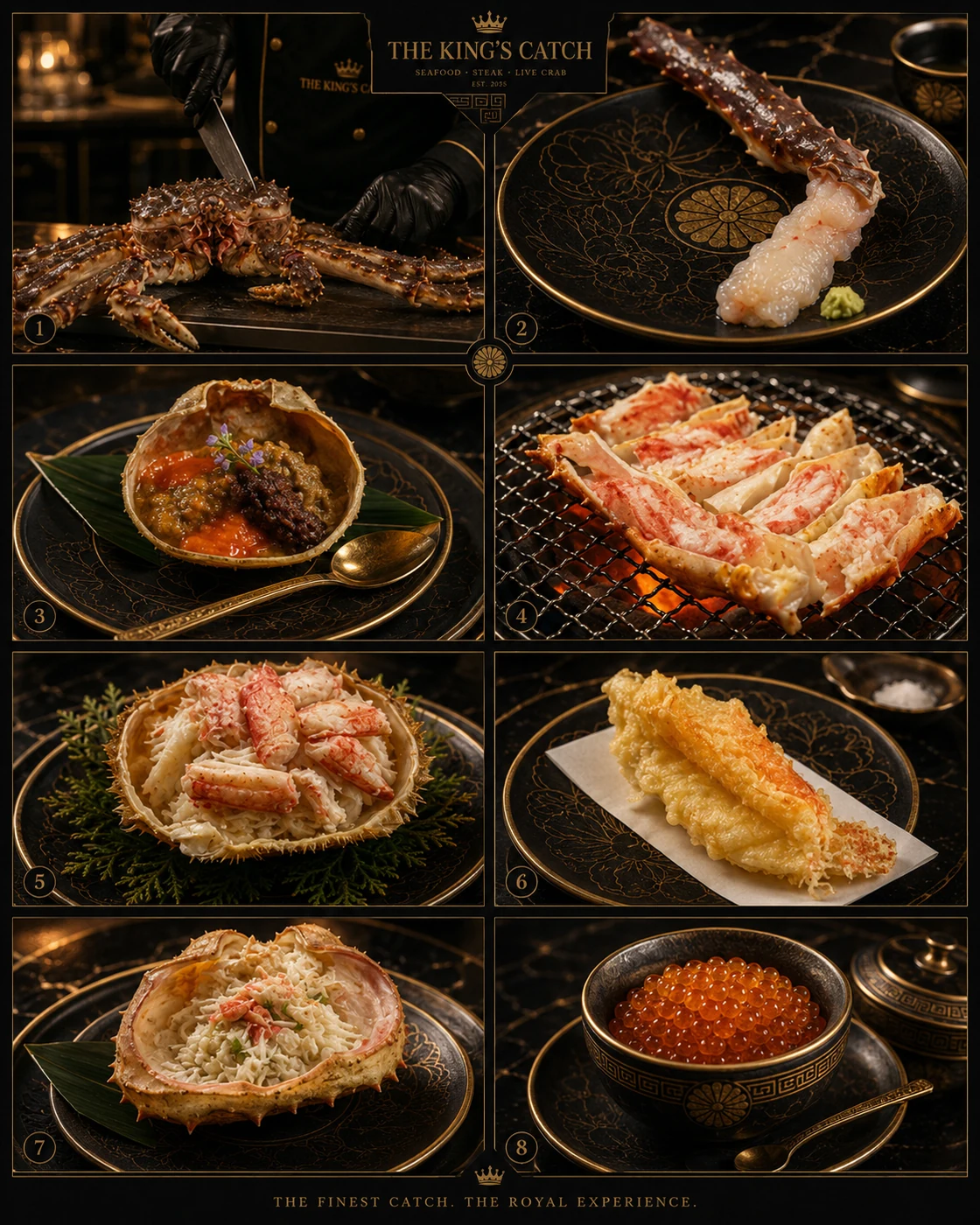
Cost ratio ~40%. Live king crab only (1.4kg minimum for 2 = 700g/guest). The showable finishing (sashimi / shabu / boiled / grilled) is cooked tableside at every seat, while tempura and the closing crab rice come from the kitchen, plus a small dish. The price is for the minimum size; size the crab up by weight surcharge (to XXL 3.5kg+)
Cost ratio ~40%. Live king crab + live hairy crab (each from its minimum size). The showable finishing (sashimi / shabu / boiled / grilled / shell-grilled) is done tableside; tempura and crab rice come from the kitchen. The price is for the minimum size; size up by weight surcharge
Cost ratio ~35%. Live king crab + live hairy crab + two extra dishes (premium caviar, Rebun uni, etc.). Each crab is priced at its minimum size; size up by weight surcharge. The top-tier selection
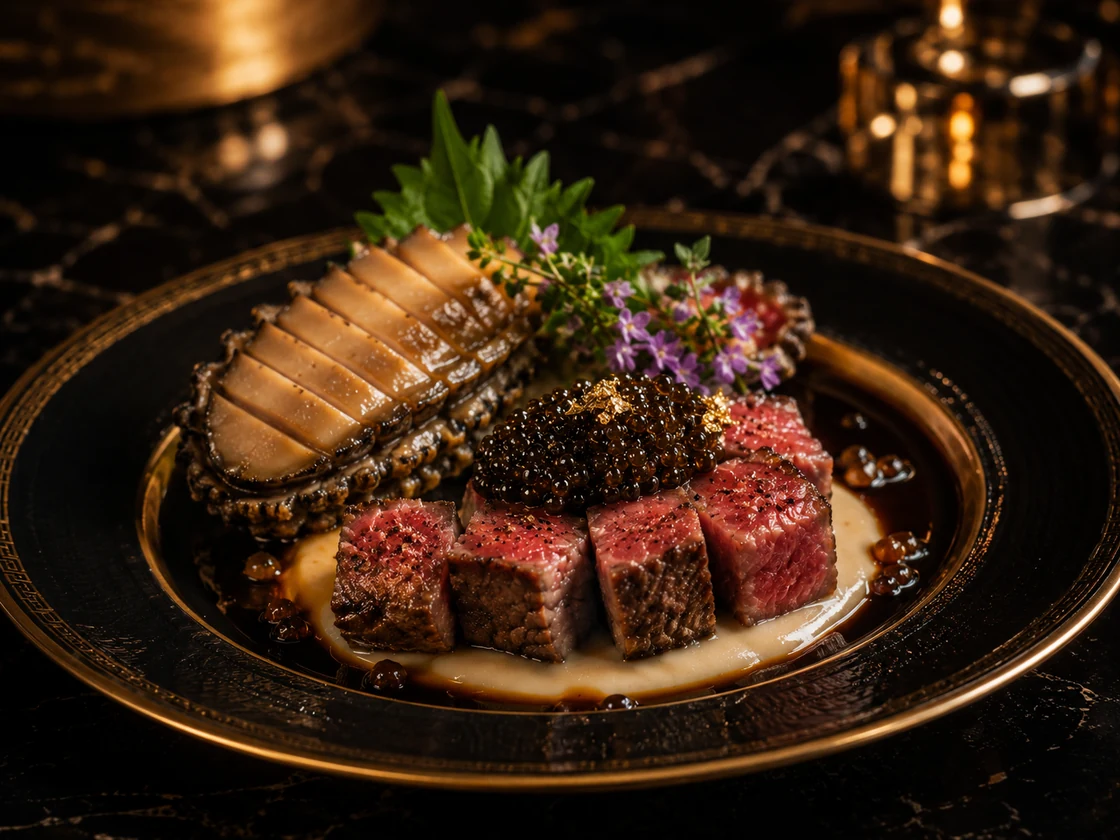
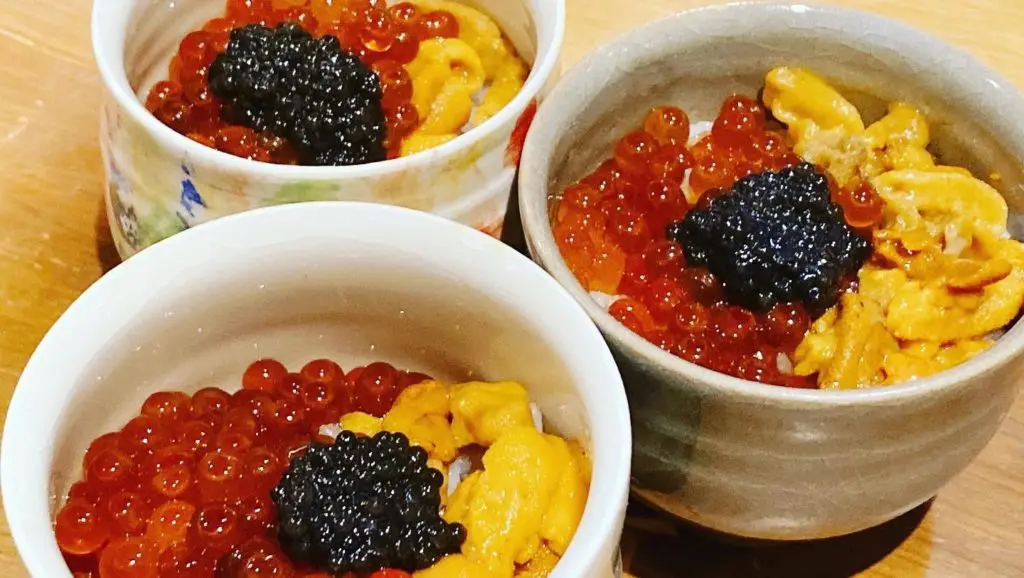
Fine Russian caviar (direct from source, with a cost advantage on a quote basis) elevated to a starring role. A set of crab × caviar dishes that are 'photogenic, high-ticket, and cost-effective.'
Seared extra-large live king crab × Russian caviar — the king's dish
A plate of live horsehair crab × Rebun sea urchin × Russian caviar
King crab sashimi tartare × Russian caviar × natural salt
Crab miso × Russian caviar (with a brewery's daiginjo)
A Russian caviar tasting — layered over king crab / sea urchin / scallop
Bar / drinks — the second pillar of profit
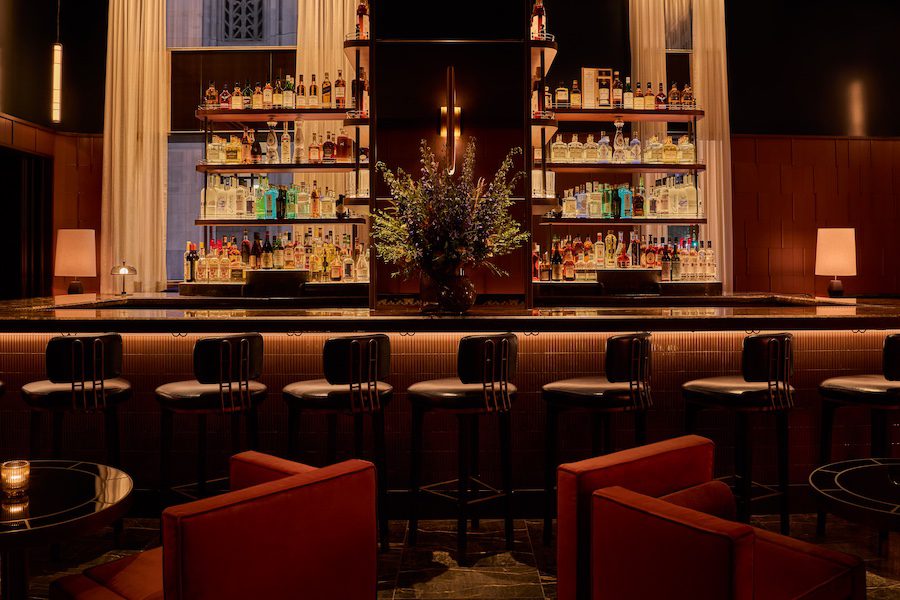
All ordered separately. [The show bar (6 seats)] = an open bar near the tank that 'shows off' the craft of making drinks, as both show and interior. The 6 seats allow a drink during the wait, with à la carte and drinks available to order (the cook-before-you performance course, THE KING and above, is for tables only; live butchery only in VIP private rooms). The dining room is all-table drinks.
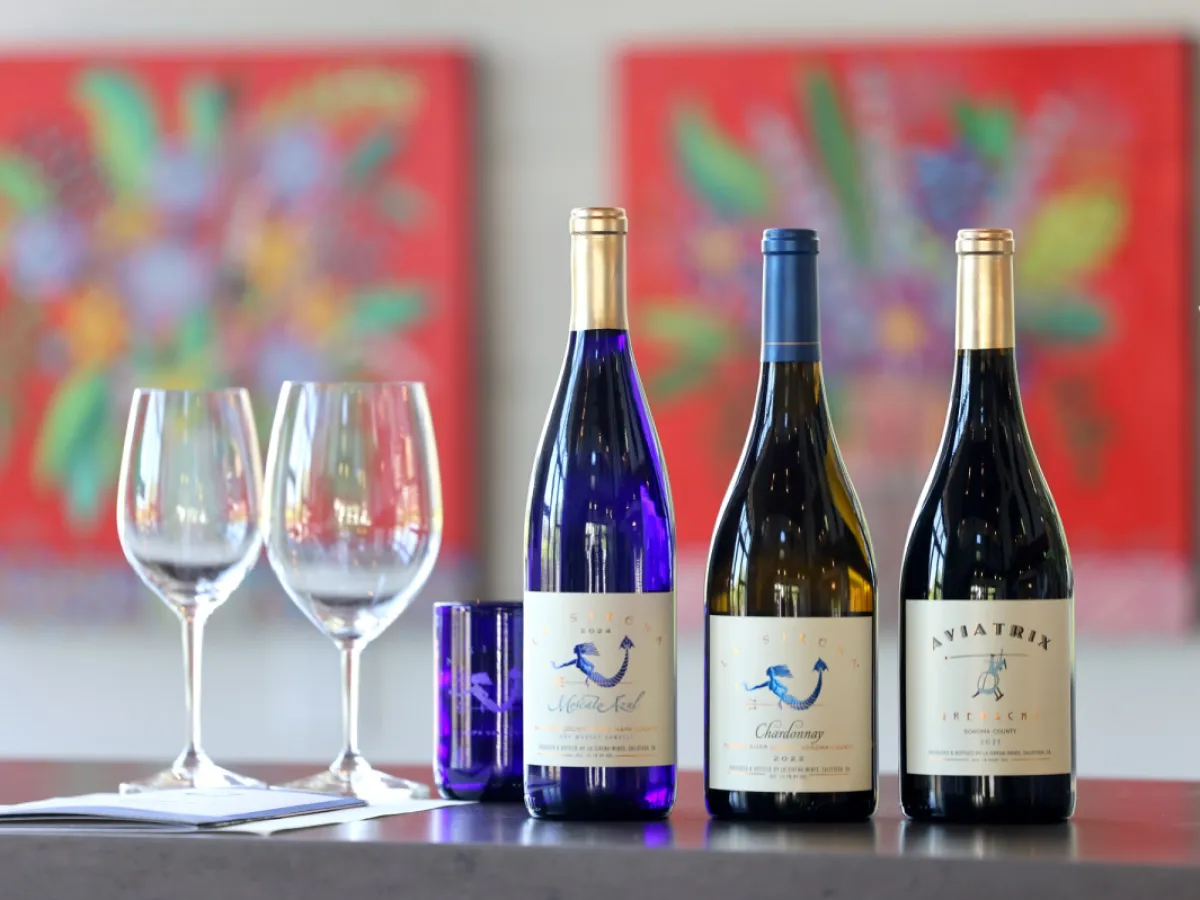
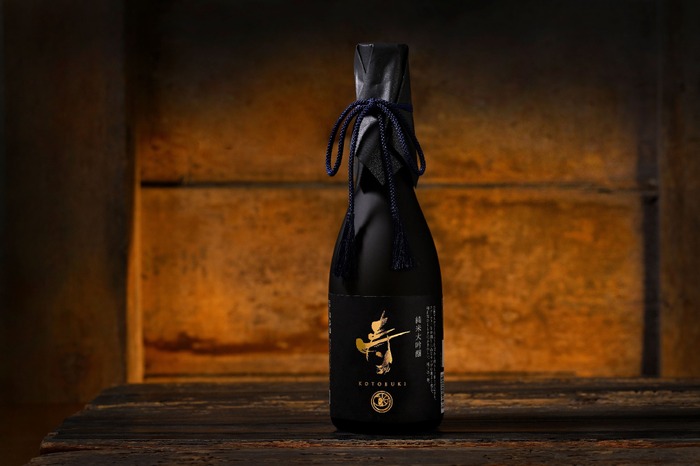
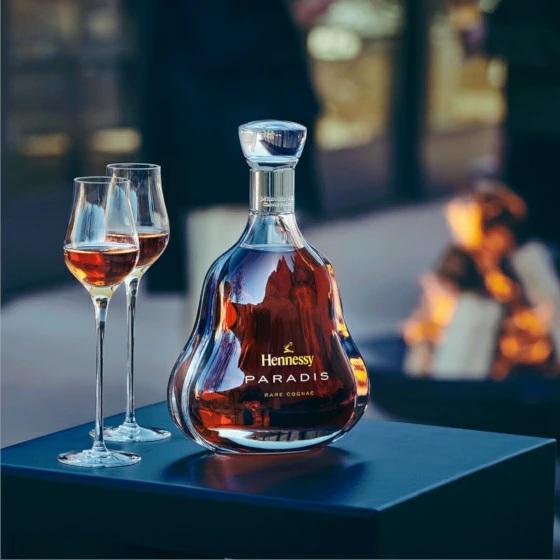
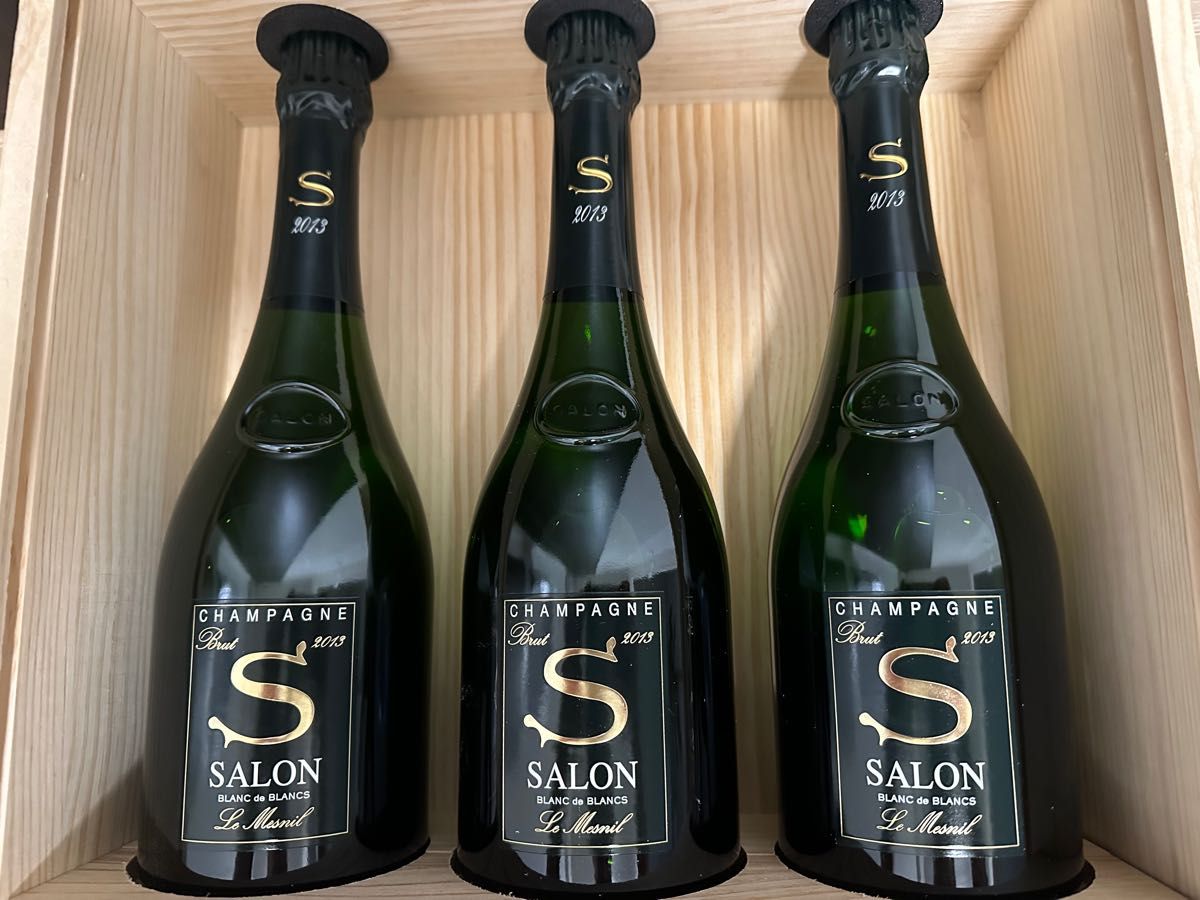
A 'show' cellar curated by the bar lead. Built around pairings to match crab, sea urchin, and caviar, the cellar itself doubles as a feature of the space.
Raw bar on tiered ice
Bluefin, abalone, scallop, ikura, oyster, uni, caviar — à la carte. High margin, quick, photogenic.
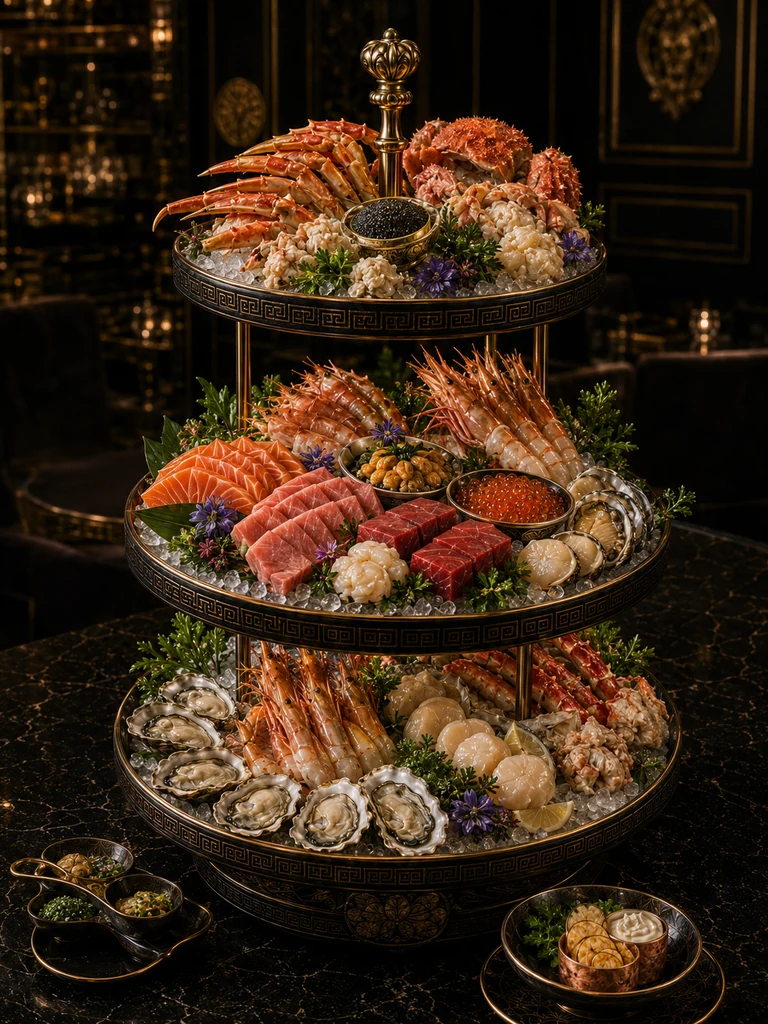
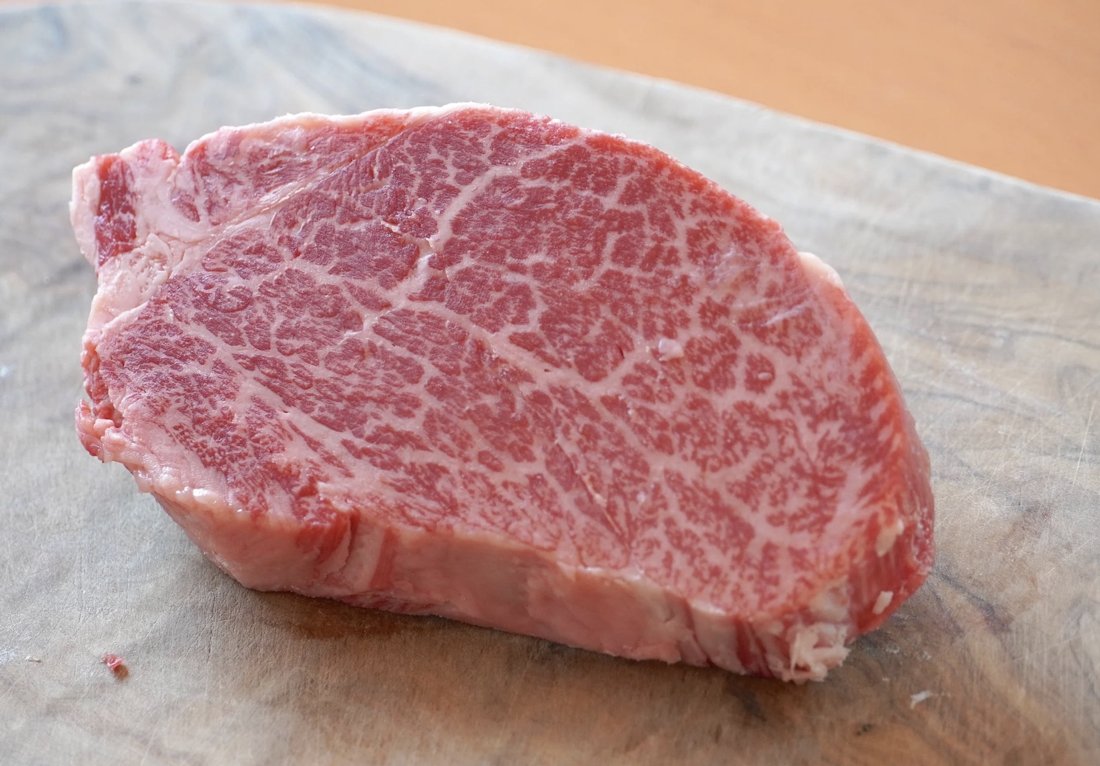
Toyosu-direct bluefin, thick-cut. Sashimi or seared (aburi otoro is superb). A la carte: otoro ¥2,600 / chutoro ¥1,800 / akami ¥1,300 (1 thick cut each)
From the tank; firm bite; sashimi / steamed / seared, your choice
Producer-direct, large. Sashimi or lightly seared (from 2 = the minimum that plates well)
Hokkaido-direct, house-marinated. Extra topping available
Producer-direct; melting sweetness; sashimi or lightly seared
Thick-cut; rich fat
Hokkaido-direct; top grade
Akkeshi / Sakoshi / Sanriku; raw-grade; raw or seared; from a single oyster
Fine Russian; blini, condiments, sour cream
Frozen / freshly-killed, boiled — the star of the ice plate
Order upward from one item; the opening photo plate for 2-6 guests.
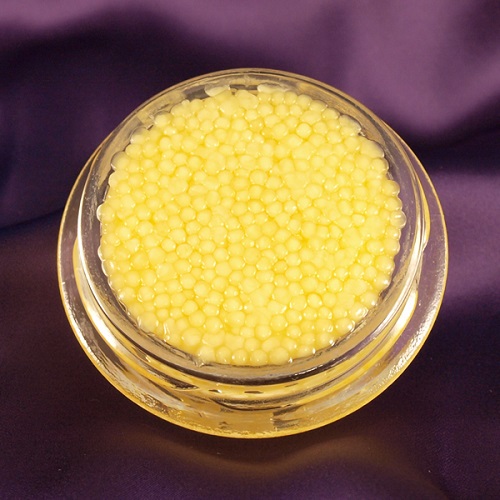
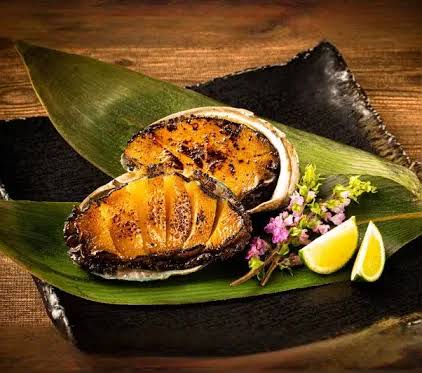
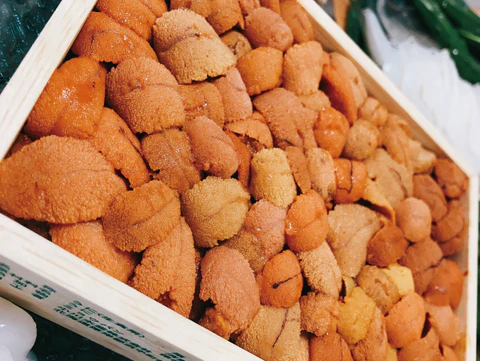
The course closes with crab rice as standard (premium rice, clay pot). It can also be swapped for, or supplemented with, white rice.
⚠ Food-safety measures Raw oysters are the single largest source of norovirus food poisoning — managed with raw-grade product, certificates of origin, and a daily norovirus SOP (details in the risk chapter). Cost runs high but is reliably recovered through à la carte (single-item) pricing.
Not a plate per guest, but big American desserts shared across the table. As the 'closing act' to the crab butchery, it brings the table to life one last time. Low cost, fat margin — it lifts per-guest spend and the worth of every extra minute at the table, and drops straight to profit.
Ice cream × sponge wrapped in meringue, flambéed before the guests. With a flame display = a closing showpiece that pairs with the crab's 'rite of the scale.' The signature dessert that captures Instagrammability, sharing, and theater all in one plate.
Shared by 4-6A tall, rich New York cheesecake cut in a large slice, served with a seasonal berry sauce.
A coconut × pecan caramel layer stacked high — a NY steakhouse classic.
Vanilla × warm chocolate fudge, topped with a Peter Luger-style mountain of whipped cream (Schlag). Happiness portioned out at the table.
Ordered as a separate 'second feast' from the course's closing crab rice, lifting the check.
At a per-guest spend on the order of ¥40K, guests' posts (UGC) are the biggest advertising. Every menu item builds in at least one moment that becomes a photo or video.
The opening act of hoisting the giant live king crab and calling out the weight
Tableside: the cross-section of the half-split, the steam, the legs coming loose. Live butchery in VIP private rooms
The color and sheen of abalone / scallop / oyster / sea urchin / gold caviar
The flame of the torch + glistening pearls (THE CROWN)
Crab miso + salmon roe bubbling in the shell; steam and gloss
Video of the moment a leg blooms open, swished through the broth
Giant live crab, the rite of the scale, blade butchery, charcoal fire = inherently Instagrammable. A photogenic moment is already designed into every dish
Affluent inbound visitors post to their followers around the world = effectively zero-cost global exposure. Tokyo, the tourist city, is the spread engine
If it goes viral, 'luxury crab = THE KING'S CATCH' explodes into worldwide recognition, and the land-grab of a blank category advances all at once
Not built into the base case (virality cannot be guaranteed). By design, if it lands, it structurally holds enormous optionality — one wing of this plan's asymmetric upside.
Supply / Sourcing
Backing the moat of the main 'winning play' with physics — the live-tank physical throughput, plus three mechanisms that structurally secure supply through investors.
Sourcing — structurally securing live supply
Physical throughput of live crab — structurally secured by investor supply
Live king and hairy crab are supply-thin; money alone cannot buy volume. Securing the route first creates a moat and over ¥150M/year of partner food-supply return. The ~15 tonnes/year includes shell, waste, size-up and raw-bar/à la carte boil volume; the serving base is ~0.67kg/cover.
⚠ 90% of wholesale depends on Russia — the 2024 poaching agreement produced a +70% shock on record. The hedge is twofold: (1) a non-Russia live-floor contract decouples supply-cutoff risk, and (2) weight-based, market-priced menus pass spikes in the live king-crab price straight through to guests, shown openly on the scale. The company-wide sensitivity to a food-cost spike (42→48% = −¥33M) is disclosed in the Chips & Risk chapter below.
Tokyo is normalized to $300 (¥48,000 ÷ ¥160) = 1.0x. The comparison breaks reproduction cost into live crab, other food, rent, labor, Japanese-chef premium and opex+margin. Launch cash is shown separately: build-out, deposits/advance rent, design supervision, permits, live-tank MEP and talent relocation/housing/flights for a flagship at the same quality. FX is ¥160/$. NY/LA/London use substitute-cost multipliers because true live giant crab is unavailable under current sanctions/tariffs.For the detailed primary sources — crab supply (OFAC/tariffs/FAO GLOBEFISH), rent (Cushman & Wakefield), construction/fit-out (Turner & Townsend/JLL), work visas (MOM/GOV.UK/USCIS) — see the Evidence page (/en/evidence).
The main-page chart shows only the multiple and live-crab availability. The regulatory / rent / labor / fit-out stack behind each city is below.
No sanctions + closest to the fishing grounds + weak yen (¥160/$). Rent, fit-out, local washoku talent and live-crab supply all close inside Tokyo — true live giant crab at the lowest viable check.
Live crab freely available and food cost near the lowest abroad as a free port. But Tsim Sha Tsui-class flagship rent exceeds Ginza, and once Japanese-chef recruitment, live-tank MEP and luxury fit-out cash are counted, Tokyo-level pricing leaves little same-margin room.
Live crab is legal, but air freight and mortality lift food cost. EP wage levels, chef recruitment, live-tank MEP and premium fit-out make launch cash heavier than Tokyo.
Sanction-free, but the longest air route and heat control create the highest food and mortality risk. Washoku talent must be recruited with housing and flights; tanks, kitchens and luxury fit-out depend on imports — tax-free status alone doesn't close the gap.
Sanctions rule out Russian crab; only scarce Alaskan supply remains. Construction, union labor, O-1-grade talent recruitment and housing make same-condition reproduction non-equivalent with materially larger launch cash.
Russian crab banned; live substitutes must cross the continent. Fifth Avenue-class rent, world-top construction costs, union labor and the washoku-chef premium stack up — same quality/margin is hard to sustain at Tokyo pricing.
Russian crab faces a 35% additional tariff and live-giant import infrastructure is weak. New Bond-class rent, top-tier European construction and Skilled Worker requirements (£41,700+) push both launch cash and the operating check far above Tokyo.
Sources: US OFAC (Russian crab banned even after third-country processing) / UK 35% additional tariff / FAO GLOBEFISH (Russian crab redistributed to Asia) vs Japan's legal imports. Rent/construction: Cushman Main Streets 2025 + Turner & Townsend/JLL 2025-26. FX USD/JPY≈160.
Base Y3 = 70% floor occupancy / 66% blended all seats, or ~12,800 covers/year (~40/night). ¥1M+ inbound travelers are ~46× that need; Tokyo ¥500M+ financial-asset households alone are ~2.7×. Healthy industry band: 65-70%; our 1.25 turns is slightly aggressive. Sources: Evidence.
Nothing wasted — whole-crab, zero-loss utilization
Every bit of the expensive live taraba and kegani — meat, shell, miso — is turned into a product. This is the other half of the supply moat (secured cheap at Toyosu live × 0.8): by wasting nothing we secure, we cut food loss and drive the effective cost lower still.
The result: we maximize the revenue from a single live crab while minimizing waste cost and food loss. The supply moat is doubled — not just secure it cheap but use all of it — satisfying sustainability and cost advantage at once.
Competitor comparison table & demand funnel
The difference is what's inside: the spectacle and the luxurious room both already exist overseas, but nowhere bundles 'Japanese cuisine's many preparations × tableside blade butchery at every seat' into that global-luxury setting. And the same 4kg live taraba runs $700-1,320 (≈¥110-210K) overseas, while Tokyo's live-crab supply puts it at ~¥90K — so only Tokyo sustains it.
The world's live-crab fine-dining splits three ways. THE KING'S CATCH stands at the intersection none of them occupy.
Japanese tableside craft (Kitafuku) stays boxed in tiny rooms; the modern halls (Water Grill) have no Japanese hand; Asia's secret sauces (The Chairman) aren't even crab specialists. To our review of publicly available sources and major guides (Michelin / Tabelog / Eater / The World's 50 Best, etc.), no venue has yet put Japanese tableside craft on a world-class stage — THE KING'S CATCH aims to be that first.
Market tailwind: within inbound spending, the F&B segment ≈¥2.07T lifts experiential value (macro detail in the main 'Product DNA' section).
Sensitivity & Downside
We confront the main deck's P&L and break-even head-on — even the case where every adverse factor hits at once: the bear case, the runway, and the late-night lounge license.
Late-Night Lounge — A Second Revenue Stream by 'Double-Cropping' the Same Box
After dinner service (until 23:00), the same room flips into a DJ-driven late-night lounge. The kitchen stays dark (zero late-night BOH labor), and the floor runs on pre-prepped light bites and drinks alone. Rent and interior depreciation are already sunk — so the incremental revenue is almost pure profit.
The ramp is restrained: revenue ¥33.8M → 52M, operating-profit contribution ¥14.1M → 25M (Year 1 → maturity).
This contribution is 'not counted' in the break-even math = a pure add-on on top of the dining business turning profitable at ~47%. That is why it is resilient to the downside.
The 23:00-01:30 operation uses this police notification, filed 10 days before opening. It is fast and fee-free, but limited to permitted zoning; Ginza 8-chome qualifies. We avoid the more restrictive entertainment-restaurant permit.
At midnight, DJ hype, dance-floor behavior and synchronized lighting stop; only recorded BGM continues. Final operating profile is confirmed with Tsukiji Police before opening, and operating responsibility remains with the operator.
The restaurant-business permit and HACCP-aligned filing are obtained pre-opening and are prerequisites. Hosting is prohibited; allowing it would turn the venue into adult entertainment. 01:30 close is the economic optimum; 02:00 adds neighborhood and labor risk.
Bear Case — If the Bad News Arrives 'All at Once'
Beyond just the upside, we face head-on the case where downside in occupancy, check size, and cost overlap. The stress test is run conservatively on the 'dining business alone,' and the late-night lounge profit (+¥25M/year) is not counted in the buffer. From the dining base case of ¥173.9M, three shocks push it to an operating loss of −¥68.3M. What matters is 'how long we can endure.'
⚠ Worst case (51% occupancy + a strong yen simultaneously) = −¥93.1M/year → the ¥35M working capital lasts ~0.4 years. This is where we move fast: renegotiating rent, adjusting staffing, and CF-linked repayment (= the repayment amount varies with that year's operating cash flow — more in good years, automatically less in tough years) make debt service automatically lighter.
The Team
The substance behind the labor cost in the main deck's 'Numbers' — who, how many, up to how much, hired when, and the single biggest dependency risk: a design against poaching the Executive Chef.
Staffing Plan — Who, How Many, Up to What Pay, and When to Hire
Labor runs from ¥188M in Y1 (31% of revenue) to ¥225M in Y5 (27%). The kitchen is cook-heavy because every seat gets tableside finishing. Three butchers cover the rare skill; three carts run in parallel; the rest cover frying, rice, stocks, raw bar and backup. Hiring is the hardest opening task, so chef LOI comes before signing property.
Approx. 24 staff (BOH 10 + FOH 14). Fewer, higher-paid full-timers replace cheap part-time layers; FOH is versatile for carts, raw bar and VIP flow. Labor sits near ~26% of revenue in Y3 and is funded by the 10% service charge. Role table ties to P&L labor: ¥188M Y1 → ¥225M Y5.
⚠ Industry headwinds (turnover, SSW freeze) are covered in the lead above. Bench depth plus chef equity/profit share reduce key-person risk.
The executive chef builds the system: rite of scale, all-seat tableside service, butchery SOPs and team training. The moat is not one chef's plates; it is ritual × tableside theater × supply × brand. We secure an excellent chef, but export a trainable show template, not a recipe. A star is upside, not base-plan revenue. Cash pay stays within the labor plan (¥188M → ¥225M); upside compensation comes through equity/profit share.
Current or former head-chef caliber at a Michelin-listed restaurant. The primary target who can execute live crab × diverse preparations at star grade. Probability: medium; cost: high
Has mastered 'Japanese food × luxury service' in NY/HK/SG/London. Global-luxury context makes them job-ready. A cohort with motivation to return to Japan
An ambitious cohort leaving a mentor's wing to seek their first executive-chef post. Easiest to persuade and realistic on cash = best cost-effectiveness
~100 regulars at the ¥300K level + introductions via celebrities = the strongest channel, near-zero cost. The first to tap
Nobu/COTE/sushi alumni, plus consulate/JETRO chef networks to find candidates wanting to return to Japan
Blind outreach to head chefs at Michelin-listed restaurants (within the ¥12M recruiting-cost line)
Final say over menu/courses/sourcing standards. A platform unattainable under a mentor
Etch your name into the world's white space as category #1. Kitafuku (16 seats) earned a star = a star is attainable in the live-crab format (not guaranteed)
Butchery + tableside finishing codified into a certified SOP (per the crab manual). Grill and prep commis are progressively certified to deepen the bench to 5-6 = further removes key-person risk and makes the JV 'export the template' actually executable (a certified operation, not a recipe)
A star depends on plate quality only. It is not in the base; if earned, it adds reservation scarcity, recruiting pull and exit multiple upside.
The Design — narrative in full
The main page keeps the visuals (logos, ONE LANGUAGE matrix, space imagery, design boards); the written design thinking lives here.
Japanese elements (the tableside butchery of a giant live crab, chrysanthemum crest, circular wa motifs) set inside the finest Western vocabulary (Greek geometry, crystal chandeliers, black marble, leather). Logo, space, plateware and fixtures all speak one language: chrysanthemum × Greek key × black × champagne gold × deep navy.
Chrysanthemum crest, Greek key, black × gold, deep navy, brass, marble. Repeating this vocabulary at every touchpoint makes the whole experience read as one coherent luxury — hard to copy, and it prices (= the substance of the moat).
The live crab tank anchors the room: center 18 seats, side banquettes 16, VIP 14, show bar 6, all on one sightline. Walnut, brass, black marble, leather and a gold chandelier shape a 'grand glamorous' room that flatters the food. The room matches the world's finest; the substance is live crab × Japanese cuisine × all-seat tableside service.
The in-store metal motifs are systematized into five families (crown / chrysanthemum / Greek key / decorative frames / accent parts), keeping logo, fixtures, walls, floor inlays and small items in a single vocabulary.
The Property
The conditions underpinning the main deck's “Property & Rollout”—ceiling height, the gutted 2F, the basement, and a 7-axis weighted-score comparison of four candidate sites.
Property Requirements — One Floor, 80+ Tsubo, High Ceiling
The showpiece is decided by height. The base case is a single floor of 80+ tsubo with a high ceiling (budgeting ¥3.2M/month, ≈¥35K/tsubo conservatively, CAM included (cheaper upper floors are upside)). Leasing two floors and opening up the middle into an atrium ourselves is only an option when such a space can be had cheaply, within budget. A basement is also an option for immersion. COTE Miami at 166 tsubo / 100 seats is a proof point of comparable scale.
80-84 tsubo total, planned FOH 70% / BOH 30%. Seats: center 18, side banquettes 16, VIP rooms 4 + 10, show bar 6. Flex tables keep cart circulation clear; every seat sees the live crab tank.
How to Choose the Property — Requirements-Driven Across Prime Central Tokyo (Not Ginza-Locked)
We do not fixate on Ginza. Any location meeting the requirements (one floor 80+ tsubo, high ceiling, ~¥3.2M/month, heavy-food-service permitted) works — Ginza, Azabu, Roppongi, Aoyama, Akasaka, Toranomon, Nishi-Azabu, Shibuya/Ebisu and other prime central areas. Below is an evaluation example on a 7-axis weighted score (prioritizing ceiling height × clientele × rent ratio) — prime street-level (¥280K/tsubo) is a different market we do not use; we budget conservatively at ¥35K/tsubo (¥3.2M/month, CAM incl.), with ¥30K/tsubo upper floors as upside.
Same trade area as Kitafuku = directly tapping the overflowing demand + capturing both domestic wealth and inbound. Single floors of 80+ tsubo on upper/basement levels actually exist (B1 heavy-dining-permitted, ¥41-44K/tsubo). If a multi-floor space comes cheap, a 2F atrium cut is also possible
Cheapest rent (standard floor ¥30,753/tsubo; Fujimizaka B1 ¥27,689/tsubo). The three-star 'Meijaku' in a B1 proves basements are not shunned. Home turf of the ¥300K-level regulars. Inbound weaker than Ginza, centered on the non-public
The Ebisu area is optimal but a bit suburban. Relatively thick supply of 60-tsubo-class spaces such as a Jingumae B1 kaiseki second-generation fit-out
A 2F gut is structurally impossible + clientele clash with the mass market + Mori Building MD review makes this concept non-compliant = not recommended
Deposit ≈10-12 months + key money + brokerage + advance rent = ≈13-16 months' worth. Property acquisition cost ¥35-50M (consistent with total cash of ¥380-420M)
Cutting the floor slab = 4 building-confirmation triggers (major alteration / change of use / shaft fire compartment per Article 112 / owner consent). A completion-inspection certificate + OK to modify the structural frame is the cutoff. Feasibility: Ginza ≥ Nishi-Azabu > Shibuya ≫ Azabudai (impossible)
Leading Candidate Under Review (Tentative) — JEWEL BOX GINZA 11F (Highest Tenant Floor)
This property meets the requirements (high ceiling, 80+ tsubo, heavy-food-service permitted, post-1981 seismic) on the upper floor of a Ginza 8-chome building. Vacancy and terms are being confirmed via the broker. Signing is conditional on the chef LOI, property DD, and contract-term negotiations. Final property may change.

Current leading candidate only. Signing depends on chef LOI, property DD and contract terms; the final property and terms may change.
Risks · Q&A · Roadmap
Complementing the main deck's “To Investors”—the triage of risks and how we clear them, answers to hard-nosed investors, and the path to opening.
The Risks, and How We Clear Them
Talent and HACCP are closure-grade risks. We clear them before opening through redundancy and CCP design.
Live red king crab cost shock (food-cost-ratio upside)
Weight-based menus pass volatility transparently at spot ¥/g, backed by Hokkaido live / Russian live / frozen sourcing and holding tanks.
Wholesale is ~90% Russia-dependent; poaching agreements drove +70%. If food cost incl. drinks rises 42%→48%, downside reaches −¥33M at 45% occupancy.
🔴 Talent = the single greatest point of failure
3+ crab-cuisine chefs, always 1 on site; grill, butchery and raw bar are redundant across staff. Chef upside comes through equity/profit share, while the moat sits in the system: scale ritual × tableside × supply × brand.
Training takes years; turnover is 29.9%; job-opening ratio 2.5x. New food-service SSW entries closed on 13 Apr 2026. Labor-cost and labor-shortage bankruptcies both jumped sharply in 2024 (TSR).
🔴 HACCP = one-strike-out risk
Treat tanks as refrigerated production equipment: daily CCP logs, 48-72h live-crab processing, cross-contamination cutoff and raw-grade freezing SOP.
One food-poisoning case can revoke the license. Anisakis was Japan's #1 food-poisoning cause in 2024; HACCP fines can reach ¥100M.
Format attrition pressure (worst-ever bankruptcy environment)
Run prime cost at 65-70% weekly and FLR at 75-80% fixed. Offset with raw bar and craft bar margins (75-85%) and protect ¥30K+ pricing through ultra-premium positioning.
Restaurant bankruptcies reached 1,002 in 2025, the first 1,000+ year in 30 years (TSR). Prime steakhouses stay thin-margin even when full.
Single-market dependence on inbound tourism and FX
Fill 50%+ from domestic regulars, corporate entertaining and resident executives; use English + SNS for inbound first-mover capture.
Chinese demand can fall 45-57% and recover over 11-15 months. A stronger yen would hit demand and spend together.
🔴 Guests who find live preparation 'cruel' (especially Westerners)
All guests can choose and photograph the crab; live butchery is VIP-room only. The floor uses tableside finishing and service, not visible killing, with humane electric-stun dispatch.
Animal-welfare criticism and SNS backlash cannot be zero. We make considerate choice visible instead of hiding the issue.
Spectacle-gimmick fatigue (buzz decay)
Buzz is not the KPI: the base plan is profitable without it, and upside remains open. The launchpad ignites, while origin, fishermen, artisans and fire technique add substance.
Hype-led luxury formats can collapse after virality fades in 6-8 months. If guests see spectacle without substance, they leave.
Anticipated objections, and answers
We answer the points a hard-nosed investor probes first, honestly and preemptively (without hiding unflattering sensitivities).
Isn't it a total loss if it fails?
The investor holds a loan, not preferred stock — senior to equity in liquidation, and protected by segregated accounts and collateral (though not a full bankruptcy ring-fence). The equipment is custom-built, so liquidation value is limited; even so, the kitchen and tanks allow partial recovery through used-equipment resale and turnkey transfer, and staged investment caps the downside.
Can ¥345M be repaid within 36 months of opening?
Yes, on two tracks: BookYou repays ¥280M from the Initial Master Operator Fee, and the restaurant repays its ¥65M direct loan from cumulative operating CF. Both are interest-bearing and start after opening; the ~12-month pre-opening period is effectively grace. The ¥35M deposit and three profitable years also support refinancing.
Can you guarantee ~48-seat no-star dining off Kitafuku (16 seats, ★)?
Overflowing demand is proof of initial momentum. Recurring demand rests on three layers: repeat visits, inbound, and the launchpad customer base. At 3× the original's scale (16 → 48 seats), we model it conservatively as a different animal entirely.
Is live red king crab tank mortality accounted for in cost?
Mortality is buffered as a few percent of procurement (inside the spot-price pass-through). The difficulty of holding is hedged via dual-track sourcing (direct vessel shipment + catalog).
Doesn't the equity get diluted?
Holdings are BookYou 50% / Partner 50% from inception, unchanged in all periods (before and after repayment). Further capital is raised via bank refinancing first, and the loan's creditor priority is unchanged.
What about live red king crab's 90% Russia dependence?
Weight-based, spot-price menus transparently pass cost spikes to the guest on the scale, and sourcing is triple-tracked across Hokkaido live / Russian live / frozen. The key to breaking that dependence is held by the supplier with a global sourcing network — the very wholesaler investing.
Roadmap to opening
The longest, hardest phase is property acquisition (a single high-ceiling floor of 80+ tsubo = base case, off-market across prime central Tokyo). We seed the launchpad in parallel (regulars, celebrities) and open within 12-15 months.
Off-market acquisition of a single 80+ tsubo high-ceiling floor in prime central Tokyo (Ginza / Azabu / Roppongi / Aoyama / Akasaka / Toranomon). DD on the completion certificate, structural-alteration clearance, and electrical/exhaust/floor-load capacity before contract
Heavy-food-service licensing (vertical-shaft zoning per Article 112 applies only if the optional 2F atrium cut is taken). Begin design and artisan sourcing for grand-class interiors
Interior construction / open grill & exhaust / live-crab tank system / butchery station. Secure 3+ crab-cuisine chefs + multiple butchery/raw-bar/grill artisans
Finalize menu/courses, HACCP CCPs, and reservations (Tock-style) build-out. Launchpad seeding (~100 parties of regulars + celebrities)
Invitation-only preview (full house via the launchpad, full price / no discounts) → coordinated PR → grand opening → Y1 ramp-up
Capital & Growth (Detail)
The backing for the main deck's use-of-funds Donut and five-year Bars—the allocation breakdown of the interior buildout and the detail behind the five-year profit accumulation.
Allocation of the ¥250M Investment (Interior Buildout)
Buildout ¥250M by asset class, matching the tax depreciation schedule and the design chapter's cost breakdown. Systems (electrical, plumbing, HVAC, kitchen, tank) take the bulk, so fully reproducing the CG with all-stone / solid-brass finishes belongs to an upper finish tier (¥300M+, with true certainty closer to ¥330-360M). ¥250M is the showpiece-focused, value-engineered target budget; deposit and working capital are separate reserves.
Tax/legal disclaimer: BookYou's ¥280M tax-loss carryforward offsets taxable income from the Initial Master Operator Fee. Partner→BookYou (¥280M) and Partner→restaurant direct (¥65M) are both interest-bearing at arm's-length rates. The 50:50 holding, related-party pricing, service nature of the fee and any supply-business conflict must be confirmed with tax/legal advisers before signing.
The Five-Year Growth Curve
~48 dining seats + 6 show-bar seats. Profit is anchored by live-crab food margin, then lifted by drinks (≈¥146.4M at 73%) and VIP room fees (¥28K/¥54K). Launchpad demand makes Y1 profitable (¥107.1M).
Upside = occupancy × premium spend × high-margin drinks. Year-5 margin: 26→35%.
Floor 55% / private rooms 45%. The launchpad (see Launchpad chapter) fills day-one seats. Margin is below steady state (25-26%) because PR, training and live-crab mortality learning add ~¥30-40M. No discounts; prepayment cuts no-shows.
Floor 64% / private rooms 62%. Fully profitable (beverage gross margin adds ¥126.2M; the brand becomes hard to book).
Floor 70→74% / private rooms 72→82%. VIP room fees (¥28K/¥54K) yield ¥14.9→17.5M/year, plus beverage GM ¥137.6→146.4M. The full ¥345M is repaid in 3 years.
For the sources of profit (revenue mix + gross-margin contribution of food / drinks / room fees), see “The Numbers” #economics in the main deck.
Scale (Detail)
The main deck's “Scale” benchmark, and the network flywheel that turns the launchpad into an asset that “grows.”
Benchmark — the multi-location scale of premium steak
We aim, in the untapped category of 'crab,' to replicate Nobu's trajectory of turning 'Japanese fine dining' into a global category and reaching a ~$1.3B scale — with no incumbent, the ceiling is even higher. The $1.3B is a valuation of the brand, not restaurant EBITDA = the real exit prize is selling the category brand IP (buyer = the wholesaler-investor or a luxury conglomerate).
Wolfgang's (operator WDI Group: consolidated ¥31.95B, 159 locations), Nobu, and COTE scaled to many locations not through pure franchising but through 'equity stake + operational-control JVs' (with a high Asia ratio). The real money is made not from royalties but from selling equity in the operating company (Nobu grew to a ~$1.3B valuation scale). Every location holds its margin in the live-crab format, and expansion is confined to markets where live crab works. EBITDA is built up inclusive of HQ royalties.
Owning the place where high-spend elites (large accounts + celebrities + inbound HNWIs) gather = the launchpad shifts from an asset you 'use' to one that 'grows.'
Elite clustering → prestige, exclusivity, repeat visits → hard-to-book status self-reinforces
Deeper networks → sourcing power for JV partners, additional capital, prime locations, talent, celebrity buzz
Private buyouts, membership, partnerships = optionality for additional revenue / exit